If you want to learn how to brew pour over coffee without wasting half a bag of beans, start with this: 15g coffee, 250g water, medium-fine grind, 2:30 to 3:00 total time. That is the baseline I give every person who asks me why their cup tastes thin or harsh. From there, you adjust one variable at a time. No drama.
I have brewed pour over on cheap ceramic cones, a dented gooseneck kettle, and a scale that sometimes turns off mid-pour. The method below is the one I keep coming back to because it is repeatable on a weekday morning when you are half awake.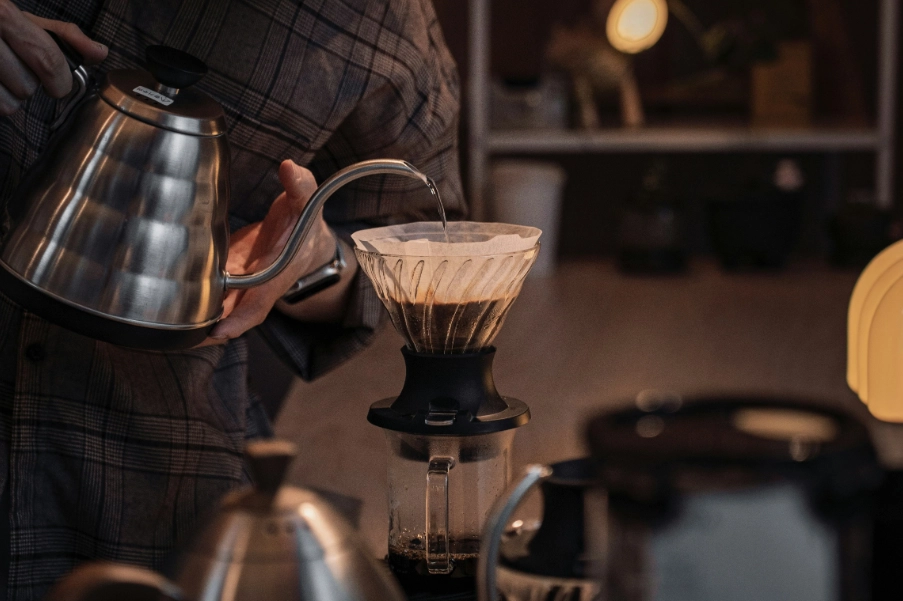
Start With a Recipe That Actually Works
Most pour over failures start before the water hits the grounds. People guess the coffee dose, dump water, then blame the beans. I did the same for months. The fix was boring: write the recipe down and keep the scale on.
Here is the ratio and timing I trust for a standard 250g cup:
| Item | Amount | Why It Matters |
|---|---|---|
| Coffee dose | 15 g | Keeps the cup strong but not syrupy |
| Water | 250 g | A 1:16.6 ratio that suits most medium roasts |
| Water temperature | 92 to 94 C | Hot enough to extract sweetness, cool enough to avoid scorching |
| Grind size | Medium-fine, like table salt | Too fine clogs the filter, too coarse drains fast and tastes weak |
| Bloom | 45 g water, wait 40 seconds | Lets trapped gas escape so the rest of the pour extracts evenly |
| Total brew time | 2:30 to 3:00 | Fast enough to avoid bitterness, slow enough to pull sweetness |
Use a scale. I know it feels fussy. But a 2g difference in coffee changes the cup more than a fancy dripper ever will. If you are brewing for two people, scale to 22g coffee and 370g water, keep the same grind, and expect 3:15 to 3:45 total.
Why Your Pour Over Tastes Sour or Bitter
You do not need to memorize a flavor wheel. Sour and bitter point to two different extraction problems, and the fix is usually the grind or the pour speed.
Sour, thin, or salty: the water moved through the coffee too fast. The grounds did not give up enough sugar. Grind finer by one or two clicks and slow your pour. I see this most often with pre-ground coffee labeled "medium" that is actually coarse.
Bitter, dry, or ashy: the water sat too long or the grind is too fine. The filter may also be clogged with fines. Grind coarser, pour with a gentler stream, and make sure you are not stirring the bed hard after the bloom.
Dial in with one change per brew
Change one thing, taste, then decide. If the cup is sour, go finer. If it is bitter, go coarser. If it is both sour and bitter, your water may be too hot or your pour is uneven. That mixed-cup problem trips up a lot of beginners because they cannot tell which direction to go.
I keep a small notebook with three columns: grind setting, total time, and taste note. One line per brew. After five cups, the pattern is obvious. No app needed.
Step-by-Step V60 Brewing
This is the method I use with a Hario V60 size 02 and a paper filter. A Kalita Wave or Chemex works with the same logic, but the pour pattern shifts slightly because the bed is wider or deeper.
Set up and rinse
Place the filter in the dripper and rinse it with hot water. This removes paper dust and preheats the cone. Dump the rinse water. Add 15g medium-fine coffee and shake the dripper gently so the bed is level.
Bloom
Start your timer. Pour 45g water in a slow spiral from the center out. Wait 40 seconds. The bed should puff up and smell like fresh bread or fruit. If it does not bubble, the coffee may be old.
First main pour
Pour to 125g by 1:00. Keep the stream thin and steady. Pour in circles, but do not touch the filter walls. Let the water drain until the bed looks flat, not dry.
Second main pour
Pour to 250g by 1:45. Give the dripper a gentle swirl once, no more. Let it drain fully. The total time should land between 2:30 and 3:00. If it drains in under 2:00, grind finer. If it stalls past 3:30, grind coarser.
That is the whole routine. It takes about five minutes including setup. On a rushed morning I skip the swirl and still get a good cup.
Gear That Changes the Cup
You do not need a shelf full of brewers. You need a burr grinder, a scale, and a kettle you can control. The dripper matters less than most people think.
A cheap blade grinder will give you a mix of powder and boulders. That is the main reason home pour over tastes muddy. A hand burr grinder like the Timemore C2 or a budget electric burr grinder fixes more cups than a new dripper ever will.
Water matters too. If your tap water tastes like chlorine, the coffee will taste flat. Filtered water or bottled water with moderate mineral content gives a cleaner cup. I tested this with the same beans and grind, and the filtered water version had noticeably more sweetness. Not subtle.
Brewing Questions I Get Asked
This guide was fact-checked against brewing guidance from the Specialty Coffee Association and my own repeated test brews. The ratios and timing are the ones I use at home, not lab-perfect numbers. They work on a normal kitchen counter.
Reader Brew Notes