Global ghost towns can harm tourists. Often abandoned after environmental disasters left residents ill, lingering toxins make these sites dangerous.
10. Picher, Oklahoma
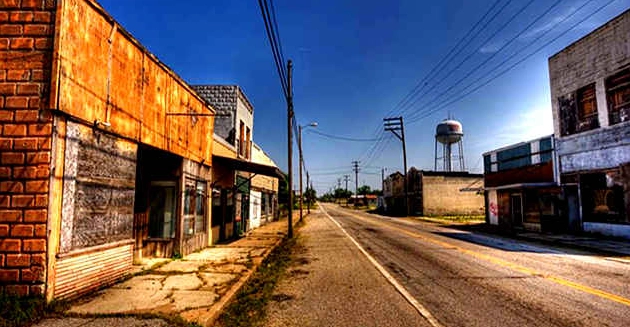
Picher rapidly expanded after lead and zinc were discovered in 1914, becoming a major global supplier. Mining ceased in the 1970s, leaving behind millions of tons of toxic chat—a poisonous byproduct. Unaware of the danger, residents used the chat in driveways, sandboxes, and recreation.
In the 1990s, testing revealed 46% of children had unsafe lead levels. Cleanup efforts failed due to sinkholes, prompting a government buyout to relocate residents. Today, the abandoned town remains toxic. Wind spreads lead dust, and wildlife continues to be affected, as evidenced by the zinc poisoning of over 1,000 migratory birds in 2015.
9. Bikini Atoll, Republic of the Marshall Islands
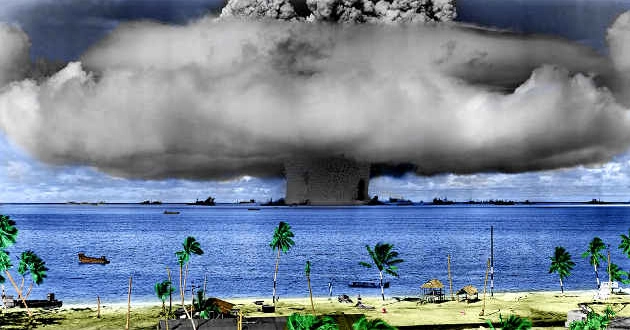
In 1946, the U.S. Navy convinced Bikini Atoll islanders to leave temporarily, claiming their land was needed to perfect the atomic bomb for peace. Over the next eight years, 67 nuclear bombs were detonated in the Marshall Islands, 23 at Bikini alone. One test was a thousand times more powerful than Hiroshima's bomb.
Officials declared Bikini safe in the late 1960s, leading many islanders to return. Within a decade, severe health effects appeared, including miscarriages, birth defects, thyroid issues, and high cancer rates. Science later revealed dangerously high radiation, forcing a second evacuation. Bikini remains uninhabitable today, with radiation nearly double the human safety limit.
8. Geamana, Romania
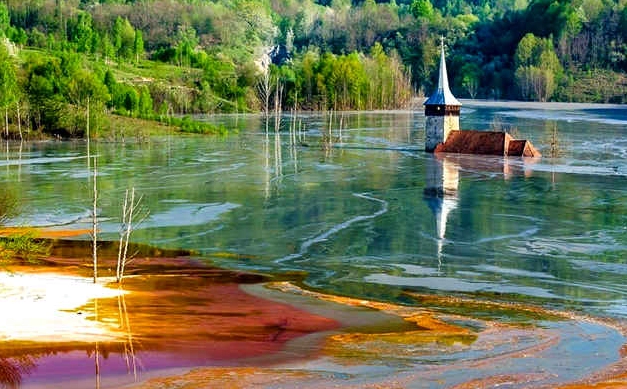
In 1977, Romania's dictator Nicolae Ceaușescu ordered the mining of a major copper deposit. To contain the toxic waste, the town of Geamana was sacrificed. Four hundred families were evacuated, and most of the village was submerged under an artificial lake filled with contaminated sludge from the mine.
At its peak, the mine produced about 11,000 tons of copper annually. As mining expanded, so did the lake, which continues to rise by one meter vertically each year. Only a church and a few houses remain visible today. The lake is highly poisonous, with chemicals turning parts of it red and cadmium levels ten times normal. This extreme toxicity can cause mutations in wildlife and severe damage to human organs.
7. New Idria, California
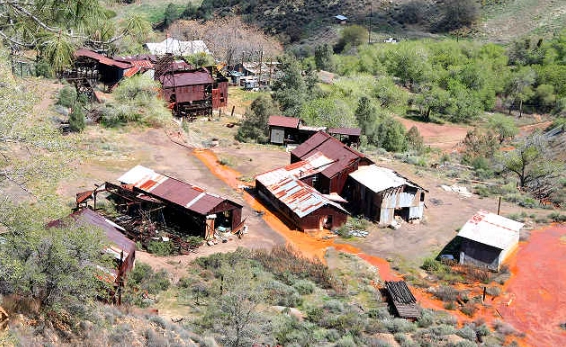
New Idria was founded in 1854 near one of America's largest and most productive mercury mines. So valuable was the mine that it was guarded by armed soldiers during World War I. Operations ceased in 1971, and the town was abandoned, leaving the site uncleaned.
Today, over 30 miles of leaking underground tunnels discharge water contaminated with mercury, aluminum, iron, and nickel. This pollution turns the local river bright orange and flows into nearby streams. Bacteria convert mercury into toxic methylmercury, which contaminates fish. Consuming such fish can cause headaches, tremors, and even nervous system damage, particularly in children.
6. Wittenoom, Western Australia
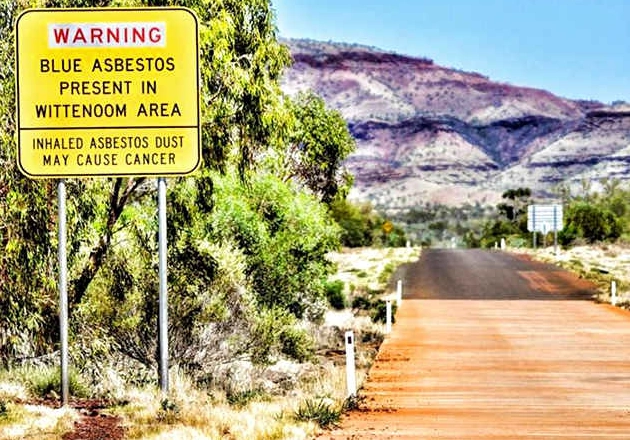
Wittenoom was Australia’s largest blue asbestos mining town, operating from the 1940s for over 30 years until the health risks of asbestos dust led to its closure. The toxic legacy has been devastating: of the 20,000 residents and workers, at least 2,000 have died from asbestos-related diseases, and even non-workers—including children—face significantly higher cancer mortality rates.
Rather than clean up, authorities chose to abandon the town. Millions of tons of toxic tailings remain piled across Wittenoom. These were also widely used in construction—in roads, pipelines, and homes—spreading asbestos fibers throughout the area. Inhaling these particles can cause fatal diseases like mesothelioma, making the entire landscape dangerously contaminated.
5. Pripyat, Ukraine
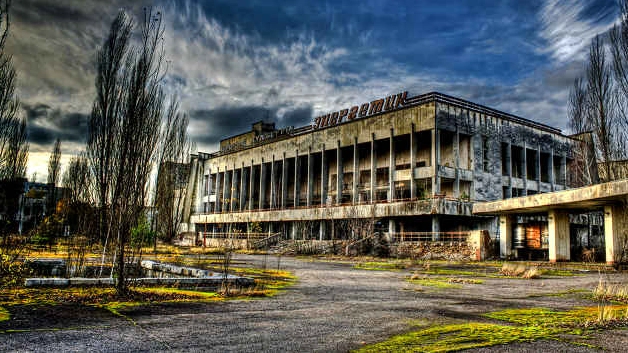
Pripyat was built as a model communist city near the Chernobyl plant, designed to embody a utopian balance of work and social life. In 1986, a catastrophic explosion at the plant released thousands of tons of radioactive waste, poisoning the surrounding environment and killing nearby woodlands.
The Soviet evacuation of Pripyat was delayed 36 hours, leaving residents exposed. While 31 people died within a month, long-term estimates from the WHO and Greenpeace range from 9,000 to 90,000 deaths. Although less radioactive today—a short visit poses minimal risk—living there remains dangerous. Studies show lasting impacts on wildlife, including smaller bird brains, slower tree growth, and fewer insects.
4. Treece, Kansas
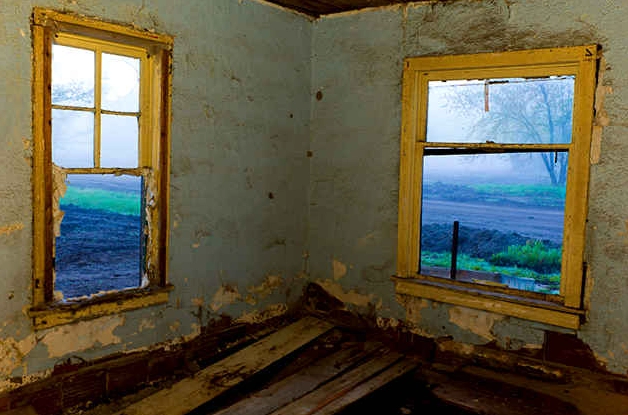
Treece, Kansas was founded after lead, zinc, and iron ore were discovered, becoming a key supplier during the World Wars. Mining ceased in the 1970s, leaving the environment devastated. The air is filled with toxic dust from massive chat piles, and the ground is unstable with sinkholes filled with contaminated water. Children swimming in them suffered chemical burns.
Residents confirmed lead poisoning through blood tests, leading to a declaration that the town was unfit for habitation. Government buyouts were offered and nearly all residents left. While decontamination continues, no future construction will ever be permitted there.
3. Bento Rodrigues, Brazil
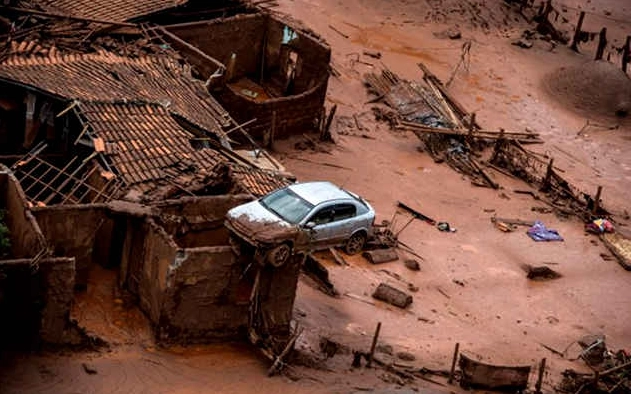
Bento Rodrigues was situated near an iron ore mine, where toxic waste was stored in a lake separated from the village by a dam. In 2015, the dam's containment wall collapsed, releasing 35 million liters of poisonous clay. A 10-meter-high wave of mud destroyed the town, coating everything in red.
UN experts confirmed the mud contained dangerously high levels of toxic heavy metals. The town's water was also contaminated, with arsenic and lead concentrations 10 to 20 times above Brazil's legal limits. The mining company relocated all residents, who may never return. Full environmental recovery could take 50 years, and the area might remain uninhabitable permanently.
2. Kantubek, Uzbekistan
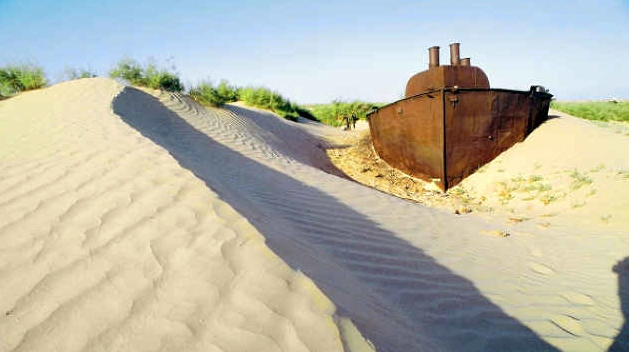
Kantubek, a town on Vozrozhdeniye Island, was a Soviet bioweapons testing site where scientists weaponized diseases using animal subjects. To contain outbreaks, they poisoned test areas, but burrowing rodents likely survived exposure to weapons-grade bubonic plague. These rodents could have carried antibiotic-resistant plague bacteria, transmitted via fleas across generations, posing a lasting human threat.
The island also stored anthrax stockpiles. Although the U.S. destroyed tons of buried spores, a hasty cleanup may have left remnants. Anthrax can persist for years in soil, making the site a enduring hazard.
1. Centralia, Pennsylvania
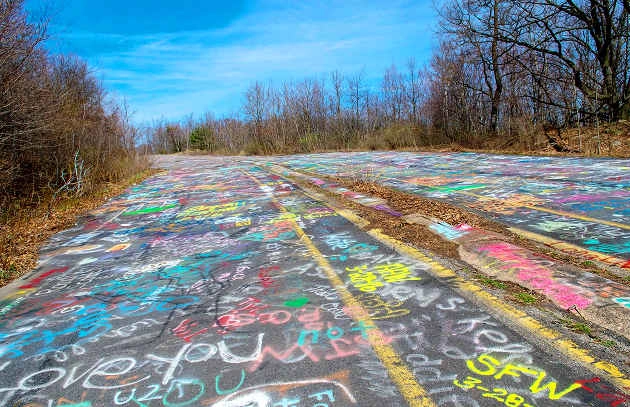
In 1962, officials burning trash at Centralia’s dump accidentally ignited an abandoned coal mine beneath the town. The fire spread through the mines, releasing carbon monoxide that seeped into homes and causing dangerous sinkholes. After a boy fell into one in the 1980s, authorities tried but failed to extinguish the blaze, ultimately relocating residents.
Today, Centralia is nearly abandoned as the fire still burns underground. It has consumed the mine’s supports, risking collapse and making the ground unstable. Toxic, sulfurous steam vents from fissures, poisoning the air to deadly levels. The town remains a hazardous, smoldering ruin.