You won’t believe these 10 ancient relics might prove aliens visited Earth centuries ago! Stick around to uncover the mind-blowing mysteries that have stumped scientists for decades.
TOP 10. Relics Linked to the Dropa Tribe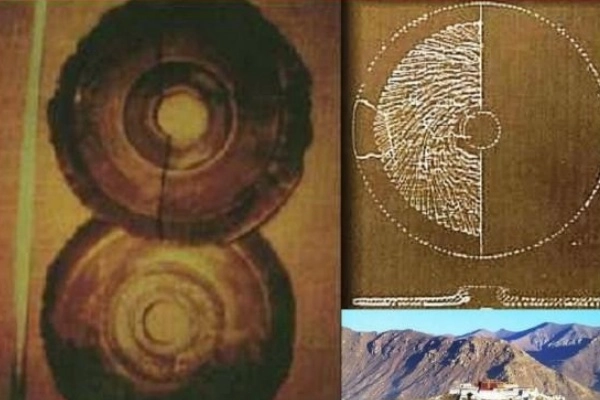
Back in 1938, archaeologists stumbled upon a tomb in a Himalayan cave holding the remains of 4-foot-tall humanoids—dubbed the "Dropa"—with scrawny limbs and oversized heads. The cave walls were covered in 11,000-year-old celestial murals, plus 716 weird stone disks: they came in all sizes, had a hole in the middle, and were etched with intricate spiral carvings that look like tiny writing. Researchers who studied the carvings say they tell the wild story of extraterrestrials who crashed in the mountains, lived with the Huns, and eventually died there. To this day, these disks are locked away in restricted storage—no international researchers allowed.
TOP 9. Ancient Roman Statue Found in Mexico
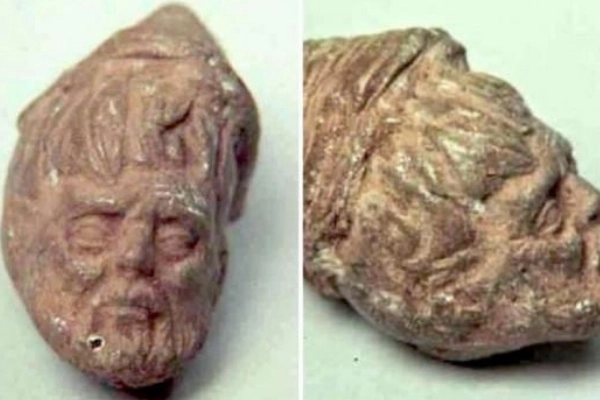
Way back in 1933, archaeologists digging in Mexico found a chunk of a terracotta statue. Turns out, it’s a Roman head—styled just like 2nd-century Roman art! A 1995 deep dive dated the artifact to between the 9th century BCE and 13th century CE—way older than the archaeological site it was found in. To this day, nobody has a clue how a Roman statue ended up in Mexico.
TOP 8. The Dogon Tribe’s Connection to Sirius

In 1930, anthropologists found the isolated Dogon tribe living in West African caves—and their story is out of this world. The Dogon claim their entire culture was taught to them by aliens from the Sirius star system thousands of years ago. Here’s the kicker: the Dogon know INSANE details about Sirius—like its orbit length, shape, and density—even though you can’t see the star with the naked eye from their villages. To this day, nobody’s figured out where this cosmic knowledge came from.
TOP 7. The Antikythera Mechanism
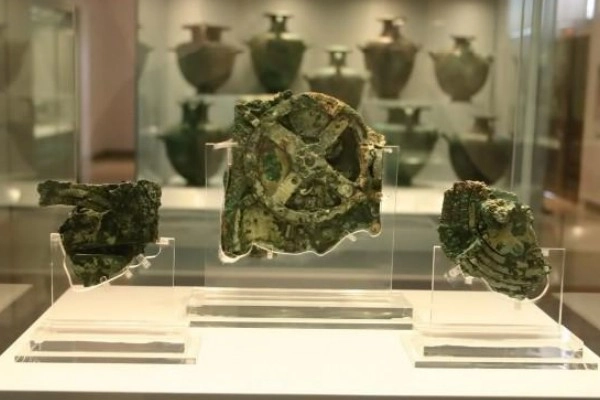
This 2,000-year-old gadget is basically an ancient analog computer—and it’s LIGHTYEARS ahead of its time! Found in a shipwreck near Greece in 1900, the Antikythera Mechanism is made of super precise bronze gears. It was used to calculate astronomical cycles and nail the positions of celestial bodies, and it dates back to 100 BCE—that’s 1,600 years before Galileo was even born! To this day, we have zero idea who built it or how it ended up on that Greek ship.
TOP 6. Triceratops Horn That Could Rewrite History
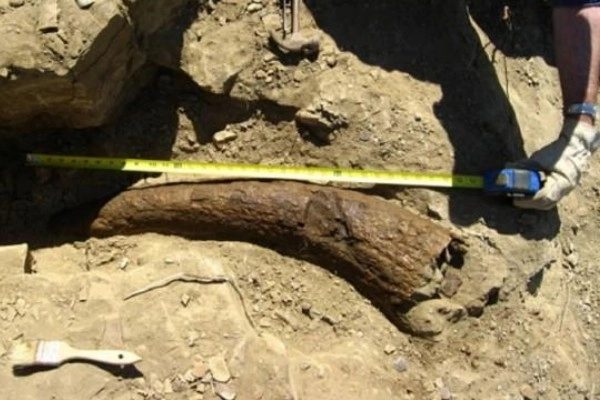
In May 2012, scientists dug up a triceratops horn in Montana—and the results will blow your mind. Tests showed it’s only 33,500 years old—totally destroying the widely accepted idea that dinosaurs went extinct 65 million years ago. That means early humans MIGHT have lived alongside dinosaurs! Sure, carbon dating tops out at 55,000 years, and most paleontologists and science journals refuse to buy the findings—but the horn is still on display at the Montana Dinosaur Fossil Museum for everyone to see.
TOP 5. The Voynich Manuscript
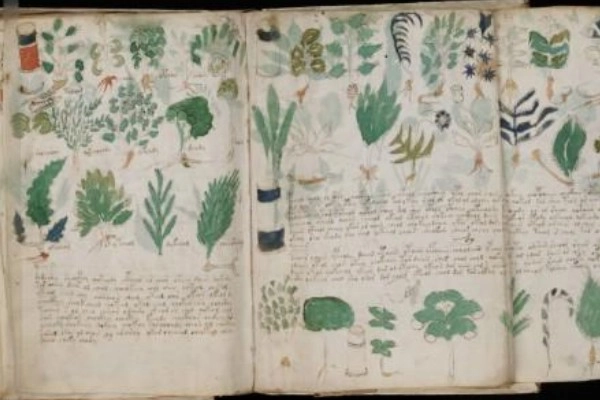
Discovered by rare book dealer Wilfrid Voynich in 1912, this 240-page book is one of the biggest head-scratchers in history. It’s packed with weirdly complex illustrations and diagrams of herbs, astronomy, and biology—plus 170,000 words written in 30 repeated characters. The craziest part? It’s all handwritten with zero edits. Carbon dating says it’s from 1404 to 1438 CE, but to this day, nobody has been able to crack the code or figure out what it says.
TOP 4. The Piri Reis Map
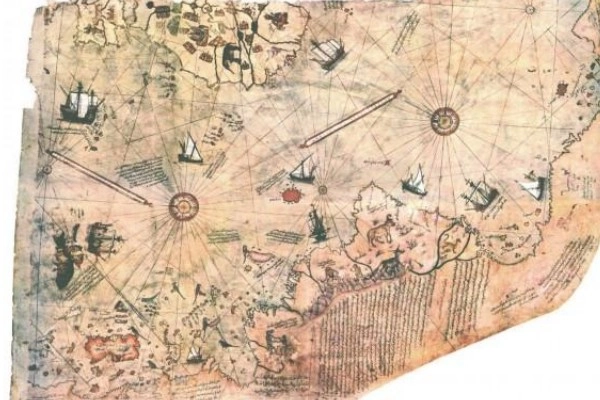
Created by Ottoman naval officer Piri Reis in the 16th century, this map was found in 1929—and it’s scarily accurate. Only a third of the original map is left, but it perfectly shows the west coast of Africa, the east coast of South America, and the north coast of Antarctica. Here’s the problem: Antarctica’s coastline has been buried under ice for at least 10,000 years, and 16th-century technology had NO way to map it that precisely. Studies say Antarctica’s coastline was last ice-free around 4000 BCE—so who the heck had the skills to map the globe back then?
TOP 3. The Zuni Tribe (New Mexico) and Japan Connection

The Zuni tribe has lived in New Mexico for nearly 4,000 years—but their language, Zuni, is nothing like other Native American languages. Instead, it’s shockingly similar to Japanese grammar (both put verbs at the end of sentences). On top of that, both the Zuni and Japanese people have super high rates of type B blood, and they’re both prone to a rare kidney disease that’s super uncommon in North America but super common in Asia. Wild, right?
TOP 2. The Hebrew Stone Inscription in New Mexico
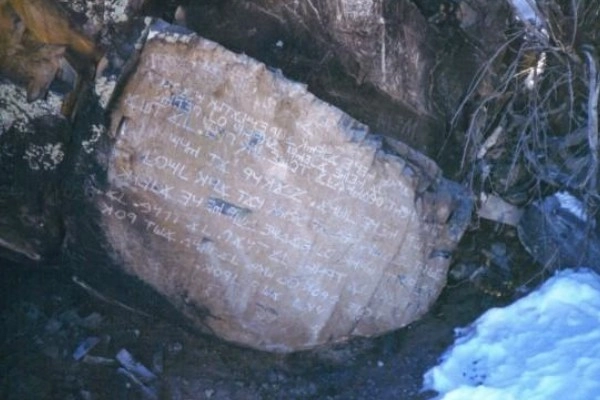
It’s called the "Los Lunas Decalogue Stone"—a 90-ton boulder covered in ancient Hebrew inscriptions that sum up the Ten Commandments. University professor Hibben and his team first found it in 1933. The inscriptions are hard to read because of rust, but modern geologists guess the stone is between 500 and 2,000 years old. Unfortunately, people touched it so much that further testing is impossible—so we still have no idea who carved it or how it ended up in New Mexico.
TOP 1. The London Hammer
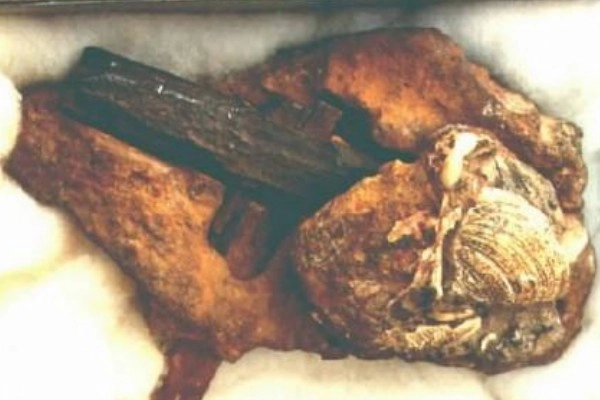
In June 1936, a couple hiking near Red Creek, London, made a totally bizarre find: a hammer with a wooden handle stuck right in a rock. Tests showed the rock is 400 to 500 million years old—yeah, you read that right! The hammer itself is about 6 inches long and 1.2 inches wide, and the iron part has chlorine and sulfur in it. The craziest part? It hasn’t rusted ONE BIT to this day.