I've roasted, bought, and yes, accidentally ruined a lot of coffee over the past ten years. The biggest lesson? Coffee freshness and storage isn't about fancy containers or secret tricks. It's about controlling three things: oxygen, light, and moisture. Get those right and your beans stay vibrant for weeks instead of days.
Here's the thing most people miss: coffee starts dying the moment it's roasted. Not when you open the bag. Not when you grind it. The clock starts ticking immediately. But that doesn't mean you need to panic-buy a vacuum sealer. Let me walk you through what actually matters.
What I'll Cover (Skip Ahead if You Want)
Why Coffee Goes Stale (It's Not Just Oxygen)
Everyone talks about oxygen. Yes, oxidation is a big deal. But there's another culprit: carbon dioxide degassing. Fresh roasted beans release CO2 for days. That's why bags have one-way valves. If you seal beans in an airtight jar too early, the CO2 builds up and creates pressure. The beans suffocate. They taste flat. I learned this the hard way with a batch of Ethiopian Yirgacheffe that tasted like cardboard after three days in a sealed mason jar.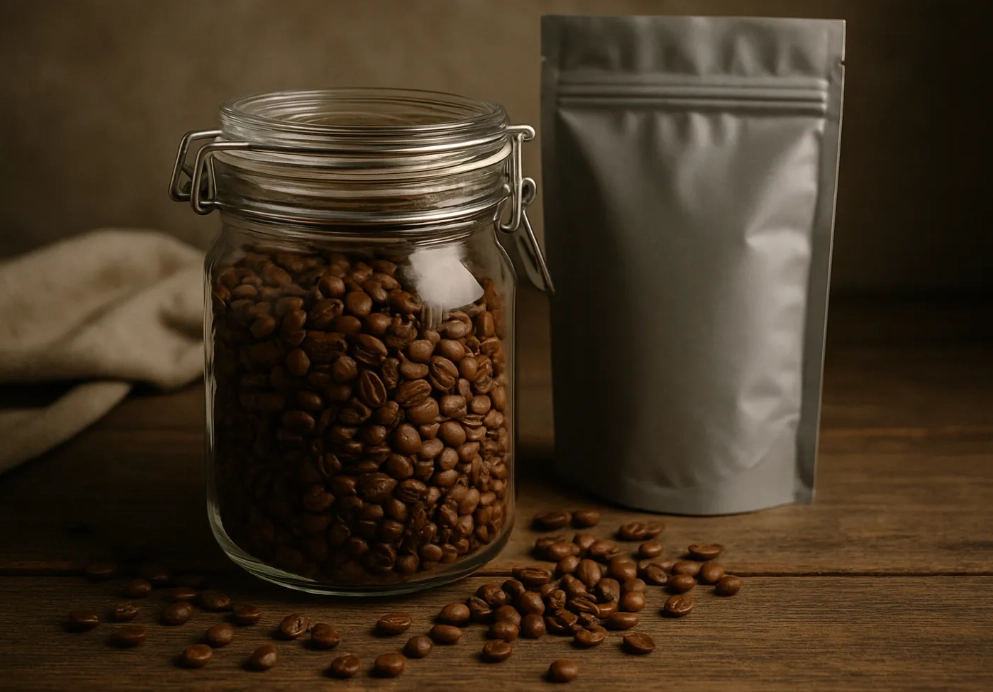
Light breaks down the oils that carry flavor. Moisture? That's the worst. A single drop of water in your bean container can kickstart mold and stale flavors. I once left a bag near my kettle and a tiny splash got in. Two days later, the whole batch smelled like wet basement.
The real enemy list: Oxygen > Moisture > Light > Heat. In that order. Your job is to minimize all four without overcomplicating things.
How to Store Coffee Beans: The Only 3 Rules You Need
Forget the 20-step routines you see online. Here's what actually works based on my experience and a lot of trial and error.
Rule 1: Keep Beans in the Original Bag (Yes, Really)
Those foil bags with one-way valves? They're designed for coffee. The valve lets CO2 escape but keeps oxygen out. I used to transfer beans to fancy glass jars. Then I noticed the beans aged faster. Why? Every time I opened the jar, a full exchange of air happened. The bag, especially if you squeeze out excess air before sealing, limits that exchange.
If you must use a container, look for one with a one-way valve. Airscape and Fellow make good ones. But don't waste money on plain glass or plastic. They're oxygen traps.
Rule 2: Buy Smaller Bags More Often
This isn't storage advice per se, but it's the most practical tip I can give. A 2lb bag of coffee will never taste as good on day 20 as a 12oz bag tastes on day 7. I switched to buying 250g bags every two weeks. The difference in cup quality is night and day. If you drink one cup a day, a 12oz bag lasts about two weeks. Perfect.
Rule 3: Store in a Cool, Dark, Dry Spot
Not above your stove. Not next to your coffee maker (the heat and steam are terrible). I use a cabinet away from the oven. My friend keeps his beans on a windowsill because it "looks nice." His coffee always tastes dusty. Don't be like my friend.
| Storage Method | How Long Beans Stay Fresh | My Take |
|---|---|---|
| Original bag (sealed, valve intact) | 2–4 weeks after roast | Best for daily use. Simple. No extra cost. |
| One-way valve container (Airscape) | 3–6 weeks | Good if you buy larger bags. Pushes air out. |
| Glass jar with tight lid | 7–10 days | Looks pretty, works poorly. Air exchange kills it. |
| Fridge (in bag) | 2–3 days | Moisture disaster. Don't do it. |
| Freezer (properly sealed) | 2–3 months | Works for long-term, but only if you follow my method below. |
Freezing Coffee Beans: When It Works and When It Backfires
Freezing is controversial. Some baristas swear by it. Others say it ruins beans. The truth? Freezing is fantastic if you do it right, and terrible if you do it wrong.
Here's my method: portion beans into single-use vacuum-sealed bags (or mason jars filled to the brim with no air gap). Freeze at -18°C. When you want coffee, take out one portion and let it come to room temperature before opening. That last part is critical. Condensation forms on cold beans when they hit warm air. If you open the bag while beans are still frozen, moisture ruins them.
I tested this with a Kenyan AA roast. One batch went straight into the freezer in a vacuum bag. Another sat in a jar on my counter. After four weeks, I brewed both. The frozen beans tasted nearly identical to day-one. The counter beans were flat and woody. But I've also seen people freeze beans in a ziplock with air inside. Those came out tasting like freezer burn and regret.
My rule of thumb: Freeze only if you won't finish a bag within three weeks. Otherwise, just store it properly and drink it. Coffee is meant to be enjoyed, not hoarded.
5 Storage Mistakes I See Constantly (I've Made Them All)
Let me save you some pain. These are the ones that cost me the most money and flavor over the years.
Mistake 1: Using the fridge. The fridge is a moisture factory. Every time you open the door, humid air rushes in. Your beans absorb it. I tried this once in my early days. The beans smelled like last night's leftovers.
Mistake 2: Grinding too much at once. Ground coffee stales in hours, not days. The surface area increases exponentially. If you grind a week's worth on Sunday, by Wednesday it's dead. I now grind per cup. It takes 30 seconds. Worth it.
Mistake 3: Buying pre-ground coffee. Same reason as above. Unless you're camping and have no grinder, always buy whole bean. The flavor difference is not subtle.
Mistake 4: Storing beans in a clear container on the counter. Light is a silent killer. It breaks down the aromatic oils. My old clear jar experiment taught me that beans on display look great and taste awful.
Mistake 5: Keeping the bag open and just rolling it down. This lets in a fresh supply of oxygen every time you scoop. Use the clip that comes with the bag, or squeeze out air and seal tightly. I use a simple chip clip. Costs a dollar. Works better than a $30 jar.
Straight Answers to Real Coffee Storage Questions
I bought a bag and it has no roast date. How long can I keep it?
This is my biggest frustration with supermarket coffee. No date means you're guessing. Assume it's already stale. I'd skip it and find a local roaster who prints the roast date. If you're stuck with it, use it within a week and don't expect much. The flavor will likely be flat and papery.
Can I store coffee beans in the freezer long-term without vacuum sealing?
You can, but you'll lose quality. A ziplock bag with air inside will cause freezer burn and moisture issues. If vacuum sealing isn't an option, use a mason jar filled to the very top (no air space) and accept that the beans might taste slightly muted after two months. For shorter freezes (under a month), it's fine.
My beans smell amazing in the bag but taste flat when brewed. What's going on?
This usually points to one of two things: you're brewing with water that's too hot (over 96°C kills delicate flavors), or the beans were roasted too long ago. Fresh coffee should smell and taste vibrant. Flat taste with good smell often means oxidation started before you bought it. Check the roast date. If it's over six weeks old, that's your culprit.
Is it worth buying a dedicated coffee storage container?
Only if you buy beans in bulk (2lb bags or more). For standard 12oz bags, the original valve bag works perfectly. A $30 container won't make stale beans taste fresh. Spend that money on better beans instead. I've tested both ways. The bag wins for daily use.
At the end of the day, coffee freshness and storage comes down to common sense. Buy fresh, buy small, keep it sealed, and drink it while it's good. I've tried every gadget and trick. The simple approach wins every time. And if you ever need a reality check, brew two cups side by side: one from a fresh bag, one from beans that sat in a jar for a month. Your tongue will tell you everything you need to know.
This article was fact-checked against guidelines from the Specialty Coffee Association and my own ten years of home brewing logs.
Reader Brew Notes